
### Blog Post:
Eco friendly pet products are reshaping how pet owners choose supplies, toys, and care items, promising a smaller environmental footprint while delivering quality for cats and dogs alike. With surging demand, it’s never been more important to evaluate what’s truly sustainable—and what’s just smart marketing. Whether you want to reduce waste, avoid harsh chemicals, or support recycled manufacturing, you’ll find real, actionable guidance here.
Key Takeaways
- The eco friendly pet products market is set for decade-long growth, driven by environmental awareness.
- Choosing sustainable pet products requires critical examination of labeling, durability, and true recycling practices.
- Common challenges include greenwashing, product lifespan, and cost—but smart strategies can help you avoid these pitfalls.
- Eco Friendly Pet Products: What & Why
- How to Choose Eco Friendly Pet Products: Step-by-Step Guide
- Advanced Analysis & Common Pitfalls
- Conclusion
- FAQ
Eco Friendly Pet Products: What & Why
The push for eco friendly pet products arises as pet owners become more conscious of their impact on the planet. The global sustainable pet products market has already surpassed $35 billion in 2024, with a projected CAGR of 7.6% through 2034, according to industry analysis. But what qualifies as eco friendly in this rapidly growing space?
Eco friendly pet products are manufactured with materials and processes that minimize harm to the environment. Typical examples include toys made from recycled plastic, compostable poop bags, bio-based litter, organic grooming supplies, and sustainably sourced beds. Product packaging, shipping processes, and even supply chain transparency all play a part.
Making smarter choices protects the environment, but also addresses increasing consumer demand for safer, non-toxic, and ethically sourced pet supplies. It’s important to look past buzzwords and evaluate if the product actually delivers on its sustainable claims—without sacrificing your pet’s comfort or health.

How to Choose Eco Friendly Pet Products: Step-by-Step Guide
You don’t have to overhaul your pet care routine overnight to make a meaningful impact. Instead, use these steps to evaluate and introduce eco friendly pet products—with confidence, not confusion.
Step 1: Audit What You Already Have
Start by listing out your current pet products: food, toys, beds, grooming, litter, and cleaning supplies. Note what contains plastic, which items are single-use, and what might be easily replaced with a sustainable alternative.
If you’re thinking about upgrading your pet’s comfort, consider orthopedic pet beds that use recycled memory foam or organic fabrics. For cat owners, modern cat furniture often incorporates FSC-certified wood and non-toxic finishes.
Step 2: Read the Label—But Verify
Look for specific language—not just “eco friendly.” Reputable brands disclose material origins, production processes, and recycling instructions. For example, compostable dog poop bags should list “certified compostable” rather than just “biodegradable.”
Review pet dental products as well. For example, focus on dog dental powder with plant-based ingredients and plastic-free packaging wherever possible.
Step 3: Evaluate Durability and End-of-Life
The most respectful choice is a product that lasts. Investigate how long the toy, bed, or bowl will hold up. A recycled polyester leash that lasts ten years beats a compostable collar that frays within weeks. Understand the product’s end-of-life: can it be recycled, composted, or safely disposed of?
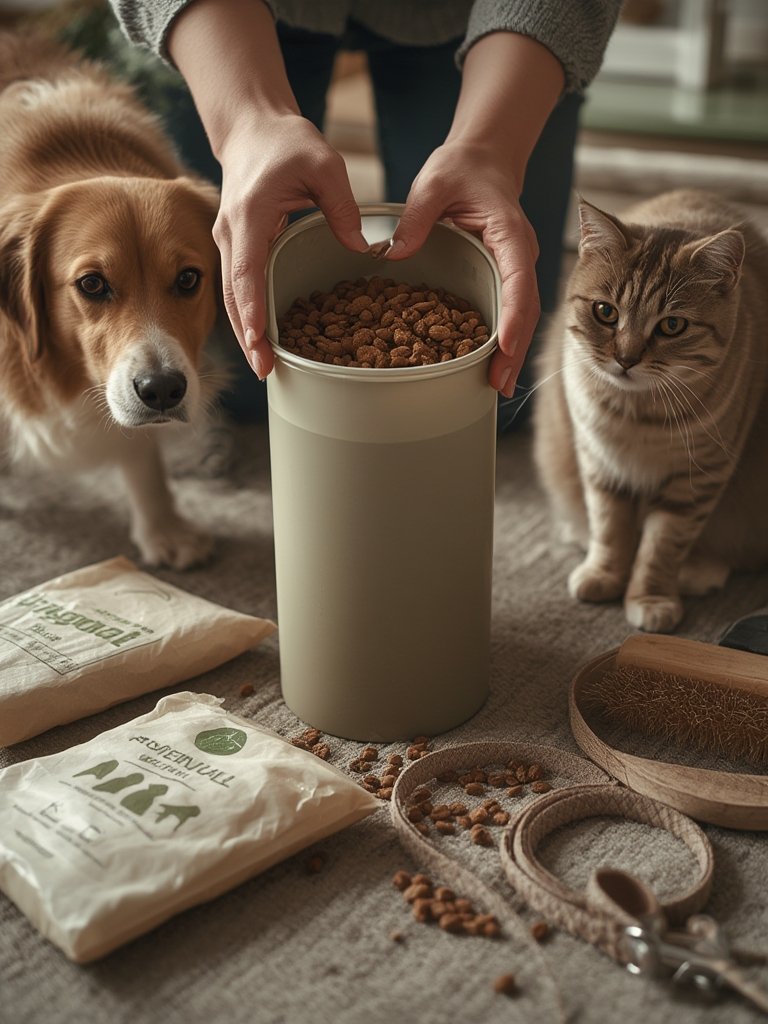
Step 4: Prioritize Minimal, Recyclable Packaging
Packaging matters—opt for brands with minimal, plastic-free, or compostable packaging. Explore broader home organization options through eco strategies, like these eco friendly kitchen storage solutions that can inspire packaging reuse or upcycling in your pet stations.
Step 5: Buy Local or Bulk When Possible
Pet food and treats are leading the way in sustainable purchasing. Support local producers when possible to shrink the carbon footprint. When ordering online, bundle items or subscribe for larger, less frequent shipments.
If feeding convenience is key, consider an automatic pet feeder that minimizes single-portion waste. Some models use recycled components and smart sensors to reduce battery use as well.
Step 6: Research Company Ethics
Brands prioritizing renewable energy, carbon-neutral shipping, or transparent labor practices add value beyond materials alone. Use resources like the Eco-friendly Pet Products Market Research Report 2034 to track leading players and new certifications.
Advanced Analysis & Common Pitfalls
Eco friendly pet products are advancing quickly—but risks and obstacles remain. Awareness of these issues will help you become a savvier shopper.
Common Pitfalls:
- Greenwashing: Many products claim to be “natural” or “green” without third-party validation. Look for real certifications rather than buzzwords.
- Compromised Quality: Early-generation biodegradable toys and bedding sometimes decomposed too quickly or weren’t durable enough for heavy chewers.
- Lack of Transparency: Manufacturers may not detail where or how materials are sourced.
- Higher Upfront Cost: Eco friendly options may cost a bit more at checkout—but often outlast traditional versions, saving money over time.
- Safety Unknowns: Some recycled materials could contain contaminants or allergens. Check for safety data and reviews before purchasing.
Comparison Table: Standard vs. Eco Friendly Pet Products
| Criteria | Standard Pet Products | Eco Friendly Pet Products |
|---|---|---|
| Materials | Virgin Plastics, Synthetic Fabrics | Recycled, Renewable, Plant-Based |
| Packaging | Multi-layer Plastic, Non-recyclable | Minimal, Compostable, Recyclable |
| Durability | Varied, can be long-lasting | Improving, but variable |
| Lifespan | Can last, but more landfill waste | Often compostable/recyclable at end-of-life |
| Price | Usually lower upfront cost | Slightly higher, but may last longer |
| Certifications | Rarely certified | More likely to include eco/bio labels |
Explore deeper market growth and trends in the Eco Friendly Pet Products Trends Report, which notes that consumer willingness to invest in sustainable pet care options has never been higher.
Considering how your entire home setup impacts the environment? Sustainable choices in other categories, such as eco outdoor seating or eco friendly small space furniture, can reinforce your habits throughout the house.

Conclusion
Eco friendly pet products are here to stay, and making the switch benefits not just the earth—but your pet’s health and your peace of mind. As the market evolves, look for transparent brands, durable designs, and truly compostable or recyclable packaging. Want to do even more? Share your success and inspire neighbors to explore eco friendly pet products as well. Take the first step for your furry companion and start greening your pet care today.
FAQ
Are eco friendly pet products more expensive than traditional items?
Often, yes—eco friendly pet products can have a higher upfront cost due to better materials and ethical manufacturing. However, they usually last longer and reduce waste, which saves money over time.
How can I tell if a pet product is truly eco friendly?
Look for clear certifications, full material disclosure, and reputable third-party endorsements. Avoid buzzwords and seek brands that are transparent about sourcing and production methods.
Will my pet like eco friendly toys and beds as much as regular ones?
Most pets do not notice whether a product is eco friendly, as long as it is comfortable and safe. Durability and material quality matter more for their enjoyment.
What are the key signs of greenwashing in pet products?
Vague claims, a lack of certifications, and deceptive labeling are classic greenwashing tactics. Always check for certifications like USDA Organic or FSC on packaging, and review the company’s environmental policy.
Can I recycle or compost used eco friendly pet products?
Some items are specifically designed for recycling or composting. Read labels and disposal instructions carefully. If in doubt, contact the manufacturer for clarification.