
Living in a small home has its perks—less to clean, lower bills, and a cozier feel. But when every square foot counts, clutter can quickly take over. The good news? With the right strategies and a few smart storage solutions, you can make even the tiniest space feel open, functional, and beautifully organized.
In this guide, we’ll walk through practical, room-by-room tips on how to organize a small home, plus product ideas that maximize vertical space, hidden storage, and multi-purpose furniture. Whether you live in a studio apartment, tiny house, or compact starter home, these ideas will help you reclaim your space.
Start With a Ruthless Declutter
Before you buy a single bin or basket, take stock of what you own. Organizing clutter just moves it around—removing it creates real space.
The One-Year Rule
If you haven’t used an item in the past 12 months, chances are you don’t need it. Clothes, kitchen gadgets, decor, and paperwork are the biggest offenders. Donate, sell, or recycle anything that no longer serves a purpose.
Sort by Category, Not Room
Popularized by organizing experts, category-based decluttering helps you see the full volume of what you own. Gather all your books, then all your clothes, then all your kitchenware. You’ll be shocked at the duplicates.
Use the “Four-Box Method”
Label four boxes: Keep, Donate, Trash, and Relocate. Work through one area at a time and sort every item into a box. This keeps decision-making quick and prevents piles from lingering.
Maximize Vertical Space
When floor space is limited, your walls become prime real estate. Going vertical is one of the most effective ways to organize a small home.
Install Floating Shelves
Floating shelves above doorways, sofas, and desks add storage without eating into your walkable space. Use them for books, plants, or decorative baskets that hide smaller items.
Use Over-the-Door Organizers
The back of every door is untapped storage. Over-the-door organizers work brilliantly for shoes, pantry items, cleaning supplies, toiletries, or craft materials.
Hang Pegboards
Pegboards aren’t just for garages. Mount one in your kitchen for utensils, in your office for supplies, or in your entryway for keys and bags.
Choose Multi-Purpose Furniture
Furniture that pulls double duty is a game-changer in small spaces. Every item should ideally serve two functions—one aesthetic, one practical.
Storage Ottomans and Benches
An ottoman with a lift-top lid can hide blankets, remotes, magazines, or kids’ toys. Entryway benches with cubbies keep shoes and bags off the floor.
Beds With Built-In Drawers
Platform beds with under-bed drawers or lift-up storage can replace an entire dresser. If a new bed isn’t in the budget, use rolling under-bed bins for seasonal clothing and linens.
Nesting Tables and Fold-Down Desks
Nesting tables can be tucked away when not in use, and wall-mounted fold-down desks disappear after your workday ends—perfect for small living rooms doing double duty as offices.
Room-by-Room Organizing Tips
Kitchen
Small kitchens benefit most from clear, uniform containers and drawer dividers. Try these strategies:
- Add tiered shelf risers inside cabinets to double your usable space.
- Use tension rods vertically to store baking sheets and cutting boards.
- Hang a magnetic strip for knives, freeing up counter space.
- Install under-shelf baskets to use the “dead space” beneath cabinet shelves.
Bathroom
Bathrooms often have the least storage but the most small items. Focus on categorizing and containing:
- Use stackable acrylic drawer organizers for makeup and skincare.
- Add a shower caddy or corner shelves to keep bottles off the tub.
- Hang a small shelf above the toilet for extra toiletries or towels.
- Store medications and first-aid supplies in labeled clear bins.
Bedroom
A cluttered bedroom disrupts sleep and daily routines. Keep it minimal with these ideas:
- Use velvet slimline hangers to nearly double closet capacity.
- Add closet doubler rods to create two hanging tiers.
- Store off-season clothes in vacuum-seal bags under the bed.
- Keep nightstands clear with wall-mounted lamps and small charging trays.
Living Room
Since the living room is where guests spend most of their time, aim for a balance of tidy and inviting:
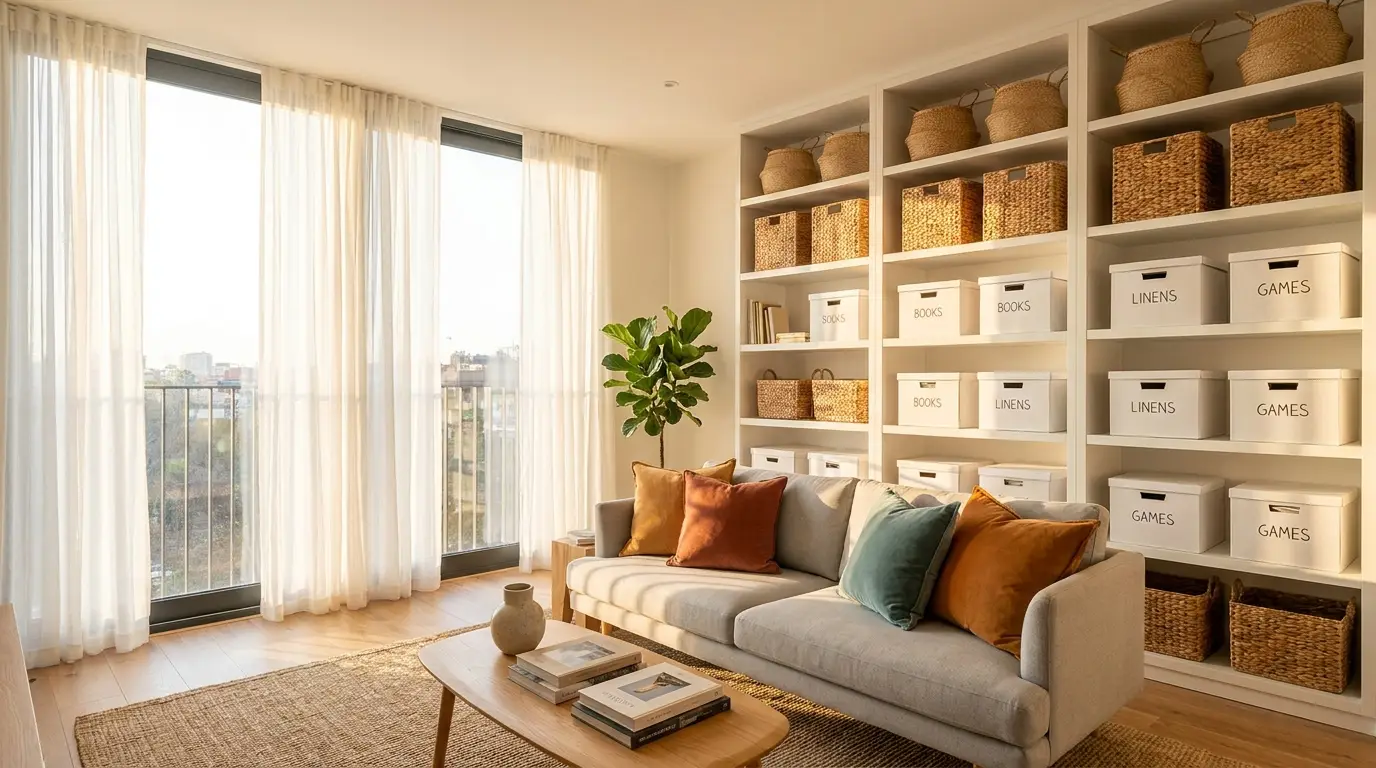
- Use decorative baskets for throws and remotes.
- Mount TVs on the wall to eliminate bulky media consoles.
- Choose sofas with hidden compartments or slim profiles.
- Corral cables with cord management sleeves or under-desk trays.
Entryway
Even a tiny entryway can be functional with the right setup:
- Add wall hooks for coats, bags, and hats.
- Place a slim shoe rack or bench with storage.
- Use a small tray or bowl for keys and mail.
Embrace Hidden Storage
Hidden storage keeps rooms looking clean and calm. The more you can tuck out of sight, the larger your home will feel.
Under the Bed
Rolling under-bed storage bins are ideal for shoes, off-season clothes, and extra bedding. Choose bins with clear lids so you can quickly identify contents.
Behind Doors
Over-the-door racks work in pantries, closets, and even bathrooms. Pocket-style organizers can hold everything from spices to cleaning products.
Inside Cabinets
Add adhesive hooks inside cabinet doors for measuring cups, oven mitts, or hair tools. Small bins on shelves prevent items from tumbling forward.
Create Zones for Every Activity
In small homes, one room often serves multiple functions. Defining zones—reading nook, work zone, sleeping area—helps each space feel intentional.
Use rugs, curtains, or bookshelves as visual dividers. A tall bookshelf, for example, can separate a bedroom area from a living space in a studio apartment, doubling as storage in the process.
Maintain the System
Organization isn’t a one-time project—it’s an ongoing habit. Try these small daily rituals:
- 10-minute nightly tidy: Reset surfaces before bed.
- One in, one out rule: When you buy something new, donate or discard something old.
- Weekly reset: Spend 30 minutes each weekend addressing clutter hotspots.
The key to keeping a small home organized is consistency. Small systems, done daily, prevent big overwhelm later.
Final Thoughts
Learning how to organize a small home comes down to three principles: own less, use vertical space, and choose furniture and storage that work harder. With intentional decluttering and smart product choices, your compact home can feel spacious, peaceful, and perfectly functional—no renovation required.
FAQ
Frequently Asked Questions
How do I start organizing a small home when I feel overwhelmed?
Start with just one small area—a single drawer, shelf, or countertop. Completing a tiny project builds momentum. Then move room by room, tackling one category at a time (like all your clothes or all your kitchenware) rather than trying to reorganize everything at once.
What is the best storage furniture for small homes?
Multi-purpose furniture is the best investment. Storage ottomans, beds with built-in drawers, lift-top coffee tables, and entryway benches with cubbies all provide hidden storage without adding visual clutter.
How can I make a small room look bigger through organization?
Keep surfaces clear, use vertical space with tall shelving, choose light colors, and hide items behind closed storage. Mirrors and consistent, uniform storage bins also help a space feel larger and more cohesive.
How often should I declutter a small home?
A deep declutter once or twice a year works well, along with mini decluttering sessions each month. Following the “one in, one out” rule daily prevents new clutter from accumulating between larger sessions.
What are the best organizing products to buy first?
Start with drawer dividers, clear stackable bins, slim velvet hangers, over-the-door organizers, and under-bed storage boxes. These versatile basics solve the most common clutter problems in nearly every small home.