
Under sink kitchen storage is one of the fastest ways to create order in messy kitchens, but most organizers miss critical plumbing details and rarely live up to the hype. Here’s what actually works—and what trips people up—when you need to maximize every inch under your sink.
Key Takeaways
- The global market for under sink kitchen storage is booming, expected to nearly double by 2033 thanks to urbanization and home organization trends [source].
- Most major pain points stem from poor fit around plumbing and limited adjustability—always measure before you buy.
- Expandable and plumbing-friendly options exist, but buyers must look beyond surface claims for true compatibility and ease of assembly.
- What Is Under Sink Kitchen Storage and Why Does It Matter?
- How to Upgrade Your Under Sink Kitchen Storage: A Step-by-Step Guide
- Advanced Analysis & Common Pitfalls in Under Sink Kitchen Storage
- Conclusion
- FAQ
What Is Under Sink Kitchen Storage and Why Does It Matter?
Under sink kitchen storage solutions are specially designed racks, drawers, and organizers that make use of the awkward, often cluttered area beneath your kitchen sink. With average urban home sizes shrinking and apartment kitchens lacking cabinet space, demand for smarter under sink systems has exploded. According to recent research, this market reached USD 2.12 billion in 2024—and is on track to nearly double by 2033, driven by the need for order and better use of every available inch [source].
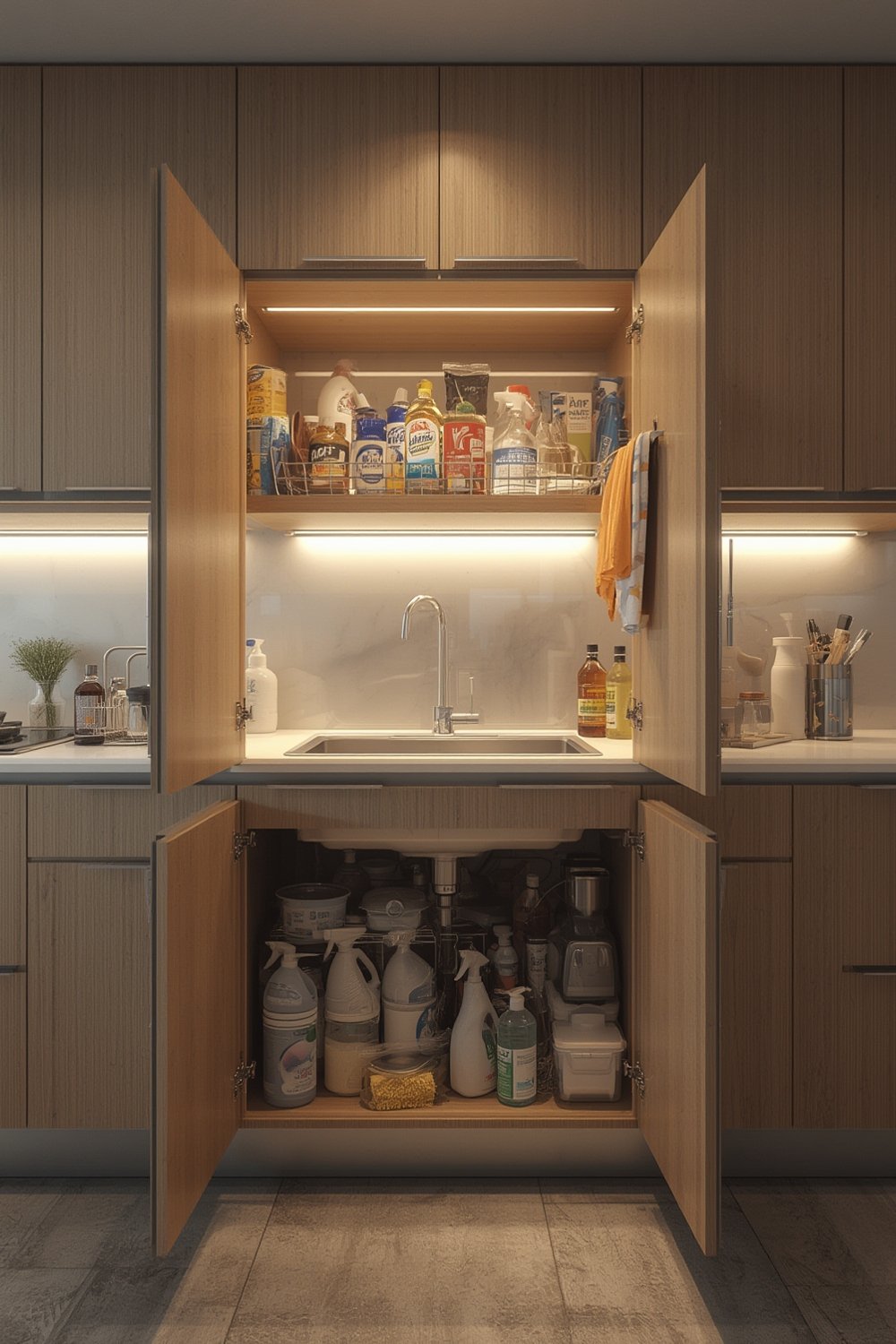
Without a storage solution, the zone beneath your kitchen sink is usually a graveyard for sponges, chemicals, and cleaning tools—all stacked haphazardly around pipes. The right organizer turns this dead space into accessible, segmented storage, making daily kitchen cleanup faster and reducing wasted time hunting for supplies.
Homeowners today want more than just a bin under the sink. Expandable, modular, and even plumbing friendly options are trending, offering a flexible fit for nearly any setup. These new solutions cater as much to renters (who need easy, no-permanent-install options) as to homeowners taking on kitchen refreshes without a full remodel.
If kitchen efficiency matters to you, optimizing this off-forgotten spot makes a major impact—especially when paired with other trending upgrades like drawer organizer inserts or pantry storage bins.
How to Upgrade Your Under Sink Kitchen Storage: A Step-by-Step Guide
- Measure Carefully
Start with width, depth, and height—not just overall, but also take note of the position and shape of plumbing (traps, water lines, valves). Quick sketches or phone photos help. - Empty and Clean Out the Area
Remove everything before fitting your organizer. Wipe the surfaces and check for leaks or spills. This helps prevent mildew or nasty smells later. - Choose the Right Organizer
Look for terms like “expandable,” “adjustable shelves,” and “plumbing cut-outs.” If you want a modular approach, check for stackable units or slide-out trays. See full guide. - Assemble Before Installing
If it’s a flat-pack system, loosely assemble it first outside the cabinet to confirm your plumbing will fit through any cut-outs. - Install and Adjust
Place the organizer inside your cabinet. Adjust for depth, shelf spacing, and clear space for hoses and bends. Expansion rods or boards must fit snug (but not too tight) so you avoid stress on fragile pipes. - Sort and Store
Group daily-use items in the most accessible spots. Use bins, trays, or hooks to separate cleaning sprays, tools, and backups. Label if necessary.
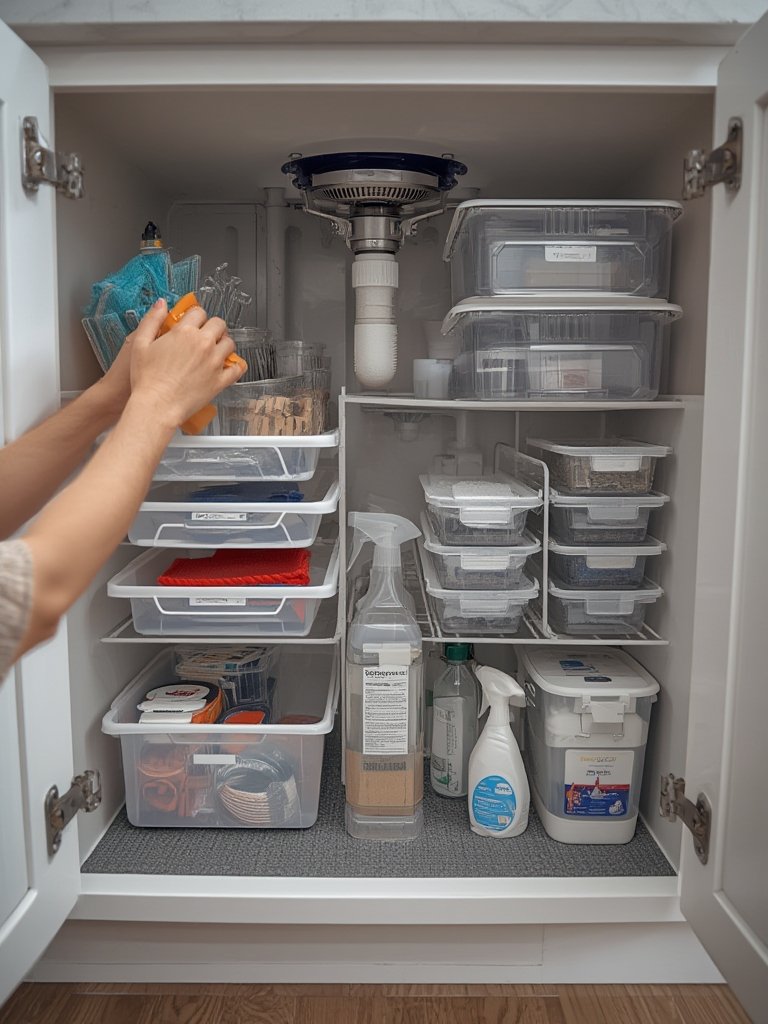
If you have a large family or stockpile supplies, combine your under sink kitchen storage with upcycled containers, lazy Susan turntables, or cabinet shelf risers for maximum leverage. Consider solutions with removable bins or pull-out baskets, especially if you’re tight on space and mobility matters.
Round out your organizing setup by exploring other trending options like closet storage systems or laundry room organizers—techniques from these areas often cross over to help contain chaos under the sink.
Advanced Analysis & Common Pitfalls in Under Sink Kitchen Storage
The under sink market is growing quickly—yet many products overpromise and under-deliver. Here are recurring issues and must-consider limitations based on aggregated research and expert experience:
- Poor Fit Around Plumbing: Most sinks have unique trap, hose, and valve layouts. Organizers without generous cut-outs or modular shelves often require time-consuming adjustments, or can’t be used at all.
- Assembly Surprises: Many adjustable racks come with minimal instructions. Some need tools like small wrenches or screwdrivers that aren’t included—plan ahead to save frustration.
- Stability Issues: Overloading shelves or failing to brace expandable racks may cause collapse, especially after regular access. Lightweight plastic models flex or bow if loaded with heavy jugs or cleaning products.
- Moisture & Mold: Leaks or undetected pipe drips can lead to warping, mold, or mildew. Choose moisture-resistant materials or apply liners under organizers—especially if you rarely check this area.
- Non-Universal Sizing: “Fits most sinks” is risky—always cross-check actual product and cabinet measurements. Oversized racks waste space and undersized units don’t solve clutter.
| Feature | Expandable/Adjustable Organizer | Fixed/Non-Adjustable Organizer |
|---|---|---|
| Fit for Plumbing Layouts | Usually better, but check cut-out size and shelf mobility | Rarely fits offsets or odd plumbing shapes |
| Assembly Time | 10-20 minutes; basic DIY skill needed | Usually pre-assembled; faster setup |
| Price | Generally higher due to modular features | Budget-friendly, but less adaptable |
| Lifespan | Can last years if not overloaded or exposed to leaks | Similar, but may warp if stacked items don’t fit flush |
| Storage Versatility | High—shelves/reach can be changed as needs evolve | Low—what you see is what you get |
Choosing between expandable and fixed under sink kitchen storage depends on your budget, cabinet size, and willingness to adjust the setup as your routine changes. If you rent or expect to move, modular systems are well worth the investment—just double-check all measurements and don’t skip the product return policy.
Conclusion
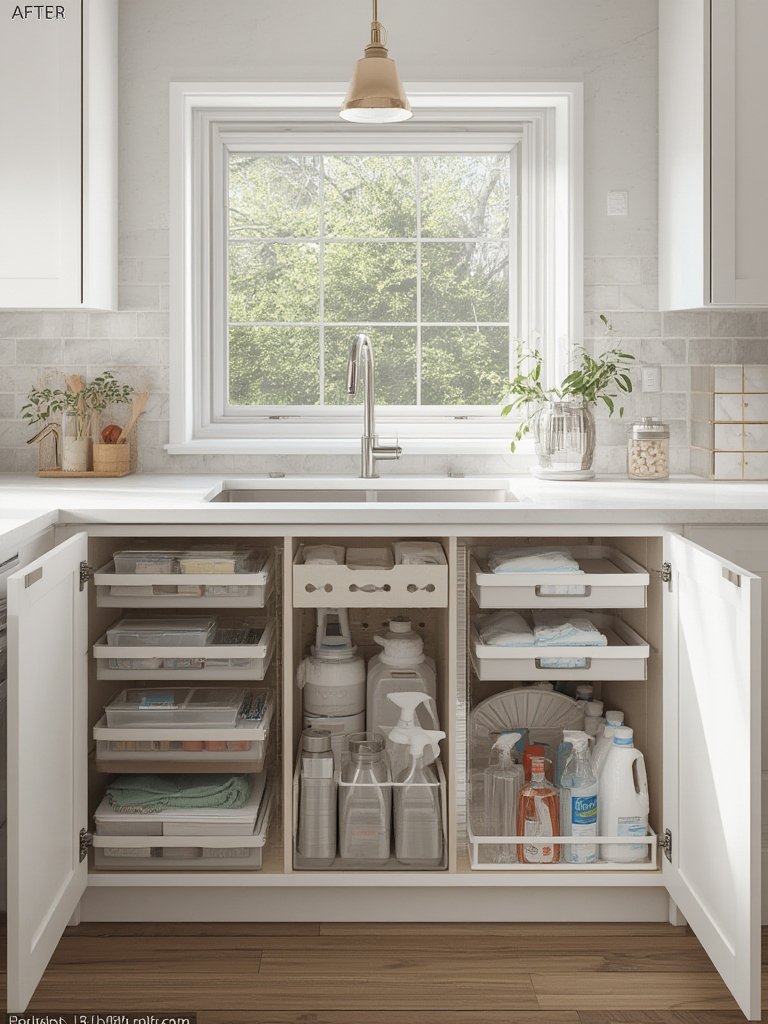
Smart under sink kitchen storage solves a messy, frustrating problem and can work in nearly any home if you choose the right approach. Measure well, pick plumbing-friendly organizers, and don’t be afraid to customize—your kitchen will feel bigger, cleaner, and more efficient. Want to stay organized? Start by mapping your under sink space today and find a solution that actually fits your pipes, your stuff, and your life.
FAQ
What is the most important thing to measure before buying under sink kitchen storage?
Always measure both the cabinet space and the position of pipes, valves, and disposal units. Height, width, and depth are critical, along with any odd bends in plumbing that could block shelf installation.
Do under sink organizers require tools for assembly?
Many expandable units do, especially if they have adjustable shelves or tension rods. A small screwdriver or wrench is often needed, but some models snap together without extra tools. Check the product listing before purchase to avoid surprises.
How can I prevent mold or moisture damage under the kitchen sink?
Use water-resistant organizers, line the cabinet floor, and check for leaks regularly. Avoid storing items in cardboard or cloth bins that can absorb moisture. If you find ongoing dampness, deal with plumbing issues before adding any storage.
Is it worth getting an expandable under sink organizer versus a fixed rack?
If your pipes are offset, unusually shaped, or you plan to change what’s stored, an expandable organizer is usually worth it. Fixed shelves are cheaper but may only fit straightforward layouts. Modular features give more flexibility, especially for renters or if you reorganize often.
Can I use bathroom under sink organizers in my kitchen?
In many cases, yes. Just confirm measurements. Kitchen cleaning products tend to be heavier and bulkier, so look for sturdier designs or models tested for multipurpose use.